ELEANOR PIEHL ARTICLE FROM 1987
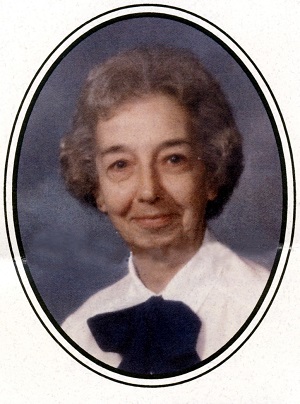 In 1987, the Voyageur magazine asked for information regarding the origin if the various historical societies in northeastern Wisconsin. Eleanor Piehl, the secretary of the organization, submitted the following article. It conveys much information about the history of Seymour and early years of the SCHS.
Our depot-museum was organized in 1976, a local expression of the 1976 patriotic fervor countrywide. Tom Duffey, publisher of the Seymour paper, The Times-Press, published an invitation for a meeting of individuals interested in organizing a local historical society. Those attending formed the nucleus of the Seymour Historical Society. Although we have since affiliated with the state organization, we do not have close ties to the Outagamie Historical Society.
The local Green Bay and Western Depot was made available through the generosity and interest of Weldon McGee, then head of a local museum. Area citizens quickly responded to the idea of a local museum. In a very short time, we had examples of early streetlights, used millstones, spinning wheels, oak filing cabinets, used bank chairs and counters, church pews, back issues of local papers and quite a bit more. We were ready to open. Carpentry, painting, gardening being accomplished by historical society members.
A large group of early photographs was of prime interest. About a dozen of those depicting early scenes and pioneer residents were reproduced and enlarged. They now form a cornice between wall and ceiling in the main museum room. In the ten-year span of its existence, the Seymour Museum has come to reflect the life and times of early Seymour, a rural center of trade and emigrant settlement of the 1870s to the 1940s. Enhanced by the building of the Green Bay and Western Railroad, separated from the city of Green Bay by the Oneida reservation lands, but augmented by the northern push of settlement from southern Wisconsin, Seymour flourished for a period of about seventy years, as trading center, a supply depot, a social and church area of reference.
The railroad brought in visiting salesmen who hustled with their black valises to the Hotel Seymour, where, on long tables before a ceiling-high, room-wide mirror in an upstairs foyer, they showed their latest styles to proprietors of local department stores or specialty shops. On a Monday on Morrow Street, a rural livestock sale took place with such regularity that farmers and area residents knew it could be a weekly socializing and marketing trip as well as cattle sales. Kuehne Brothers had a nationally respected sale of cabbage emanating from these lively Monday Morrow Street sales.
Pioneer residents described Seymour as being an almost completely independent community. Consider these early establishments: a cigar making shop, a carriage making shop, a spoke and hub factory, two lumber yards, a large grain elevator, thirteen saloons (an estimate), two blacksmith shops, a photography salon, two cheese shipping warehouses, a monument plant, charcoal kilns, numerous boarding houses, hardware and department stores, a hat shop, a foundry, a brewery, a steam-powered electric plant, a three-story grade and high school, a county fairgrounds, Catholic, Congregational, Methodist, Lutheran, and Evangelical churches.
This is the story that family historians wanted to tell with the establishment of the Seymour Museum. They could remember the caravans of horse-drawn lumber wagons carrying timber and shingles for the barns being built in the Black Creek, Hofa Park, Angelica-Pulaski area. They remembered the old Seymour Theater where they spent every Friday night, or the gala events staged in the Seymour hotels. They still talk about Phinney Graham’s boarding house, or the dangers of a young boy hanging around a dark blacksmith shop.
The interest and enthusiasm continued with the museum for the beginning years. Some financial support was provided by the city government, with most of the maintenance work volunteered by Seymour Historical Society Board members. In the last six years, museum board members have attempted to sustain interest with shows and exhibits. These shows have included a quilt exhibit, a doll show, a local arts and crafts show, and an 1890 kitchen show. Last summer (1986) we focused on individual collections: Catherine Hittner’s fan collection, a model animal collection, and a wood carving exhibit from the work of Marvin Dalke. Individuals in the community are beginning to approach the museum board members with offers of collections for exhibit. Thus, for 1987, we have a porcelain bird show slated, a bonsai collection, as well as reshowing of Centennial Parade slides for Sunday openings.
A former museum president, Bill Collar, high school football coach and history teacher, put together about 100 slides for his junior history classes and summer museum showing. A unit for grade school teaching was developed by Frances Gerber in summer in-service sessions. Our local library carries a vertical file reference where copies of area source materials can be found year around and utilized by genealogical scholars and students.
Last summer a local genealogist and office worker volunteered to photocopy all records, old newspapers, single copy photographs, all materials needing some kind of organization and filing. With that done, we feel we are pretty well organized for 1987. Our great need today is space. The interest is certainly here.
During the summer month, Memorial Day through Labor Day, we are open from 1:00 p.m. to 5:00 p.m. on Sundays. No charge of admission is asked, but contributions are accepted. Each year we have area groups wishing to see what we have and how we are organized. Such groups are always welcome, whether on Sunday, or by appointment with Seymour Board members. Those serving on the Seymour Museum Board are as follows: Rita Gosse, President; Gladys Stern; Eleanor Piehl; Maynard and Edna Sherman; Lois Dalke and Bill Collar.
Sincerely, Eleanor Piehl, Secretary (1987)